
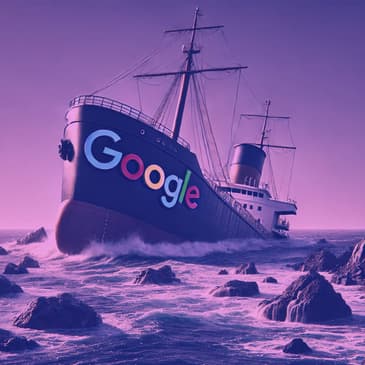
The U.S. declares Google an illegal monopoly. What's next for one of the world's biggest ad platforms? Netflix's ad prices keep dropping. Apple has another privacy feature your web site isn't going to like. And why you might have paid for your competitor's ads last week.
Rate and Review Us • Contact Us
📰 Get our free daily newsletter
📈 Advertising: Reach Thousands of Marketing Decision-Makers
🌍 Follow us on social media or contact us
Get these exclusive benefits when you upgrade:
✅ Listen ad-free
✅ Back catalog of 20+ marketing science interviews
✅ Get the show earlier than the free version
✅ “Skip to story” audio chapters
✅ Member-only monthly livestreams with Tod
And a lot more! Check it out: todayindigital.com/premium
✨ Premium tools: Update Credit Card • Cancel
MORE
🆘 Need help with your social media? Check us out: engageQ digital
📞 Need marketing advice? Leave us a voicemail and we’ll get an expert to help you free!
UPGRADE YOUR SKILLS
Google Ads for Beginners with Jyll Saskin Gales
Inside Google Ads: Advanced with Jyll Saskin Gales
Foxwell Slack Group and Courses
Today in Digital Marketing is hosted by Tod Maffin and produced by engageQ digital on the traditional territories of the Snuneymuxw First Nation on Vancouver Island, Canada.
Some links in these show notes may provide affiliate revenue to us.
Privacy & Opt-Out: https://redcircle.com/privacy
[00:00:00] [SPEAKER_02]: It is Tuesday, August 6th.
[00:00:03] [SPEAKER_02]: Today the US declares Google an illegal monopoly, what's next for one of the world's biggest
[00:00:09] [SPEAKER_02]: ad platforms.
[00:00:11] [SPEAKER_02]: Netflix's ad prices keep dropping.
[00:00:14] [SPEAKER_02]: Apple has another privacy feature your website isn't going to like and why you might
[00:00:19] [SPEAKER_02]: have paid for your competitors ads last week.
[00:00:23] [SPEAKER_02]: I'm Tod Maffin, that's a head today in Digital Marketing.
[00:00:30] [SPEAKER_02]: Historians will remember the time that Microsoft decided to bundle its Internet Explorer
[00:00:34] [SPEAKER_02]: browser with Windows.
[00:00:36] [SPEAKER_02]: And prior to that, there were a handful of third party browsers, Opera, NetScape Navigator,
[00:00:42] [SPEAKER_02]: but Microsoft put its then new Internet Explorer into every install of Windows.
[00:00:48] [SPEAKER_02]: The result was obvious.
[00:00:50] [SPEAKER_02]: Internet Explorer became the dominant browser.
[00:00:54] [SPEAKER_02]: The other thing that happened was that put the company on the radar of regulators.
[00:00:58] [SPEAKER_02]: And in 1998, the American Justice Department and 20 states filed a lawsuit against
[00:01:04] [SPEAKER_02]: the company for monopolistic practices.
[00:01:07] [SPEAKER_02]: It was messy.
[00:01:10] [SPEAKER_02]: Bill Gates was called invasive and non-responsive at his deposition.
[00:01:14] [SPEAKER_02]: He argued over the definition of words like ask and we.
[00:01:19] [SPEAKER_02]: He said the phrase, I don't recall so many times it made the presiding judge laugh.
[00:01:24] [SPEAKER_02]: In one case, Microsoft submitted a video showing how fast and easy it was for users to
[00:01:29] [SPEAKER_02]: install netScape onto their PCs.
[00:01:32] [SPEAKER_02]: But the government submitted its own video, which showed that Microsoft had edited out
[00:01:38] [SPEAKER_02]: a long and complex part of the process.
[00:01:41] [SPEAKER_02]: A company vice president eventually conceded they'd falsified the video.
[00:01:46] [SPEAKER_02]: Microsoft lost its case.
[00:01:49] [SPEAKER_02]: Google's antitrust case, which has been going on since last fall, didn't really surface
[00:01:53] [SPEAKER_02]: any eye-popping gotcha moment like those.
[00:01:56] [SPEAKER_02]: But apparently it didn't need any.
[00:01:58] [SPEAKER_02]: Yesterday, a federal judge ruled that Google unlawfully held the monopoly in the online
[00:02:04] [SPEAKER_02]: search and ad market.
[00:02:06] [SPEAKER_02]: And in particular, called out the payments Google makes to companies like Apple to be the
[00:02:11] [SPEAKER_02]: default search engine on those devices.
[00:02:13] [SPEAKER_02]: Those are huge payments, by the way.
[00:02:16] [SPEAKER_02]: The deal Apple has with Google provides it 17% of its profits.
[00:02:22] [SPEAKER_02]: If history is any guide, the relief could be divisive.
[00:02:27] [SPEAKER_02]: After Microsoft lost its case, the court ordered a breakup of Microsoft into two separate
[00:02:31] [SPEAKER_02]: units.
[00:02:32] [SPEAKER_02]: One for its Windows operating system, the other for everything else.
[00:02:36] [SPEAKER_02]: Microsoft appealed and one.
[00:02:39] [SPEAKER_02]: But it didn't win on the merits of the ruling, rather, on a technicality.
[00:02:45] [SPEAKER_02]: The judge, seemed, had discussed the case with news media while it was still in progress,
[00:02:50] [SPEAKER_02]: violating a code of conduct.
[00:02:52] [SPEAKER_02]: So while the main finding still stood, Microsoft did bad things, the breakup order was overturned.
[00:02:59] [SPEAKER_02]: In the end, all Microsoft had to do was to agree to share its APIs with third party
[00:03:04] [SPEAKER_02]: companies and appoint an independent panel of reviewers to monitor that for five years.
[00:03:09] [SPEAKER_02]: Many industry watches at the time said that Microsoft had won, even though it had lost.
[00:03:15] [SPEAKER_02]: So what's next for Google?
[00:03:17] [SPEAKER_02]: Well, everyone now moves to the penalty phase where the judge will decide how to remedy
[00:03:21] [SPEAKER_02]: the monopoly.
[00:03:23] [SPEAKER_02]: What exactly that looks like is anyone's guess.
[00:03:26] [SPEAKER_02]: It could order the cancellation of that lucrative Google Apple deal.
[00:03:29] [SPEAKER_02]: It could require Google to split its browser and operating system.
[00:03:33] [SPEAKER_02]: And in just over a month, Google will be backing court for a different anti-chus trial.
[00:03:37] [SPEAKER_02]: This one focusing on its ads platform.
[00:03:40] [SPEAKER_02]: The American Justice Department says in that case, Google has an illegal dominance
[00:03:44] [SPEAKER_02]: in the digital ad market allegedly boosting its revenue while raising cost for advertisers.
[00:03:51] [SPEAKER_02]: We have the entire Google court ruling in our email newsletter today.
[00:03:55] [SPEAKER_02]: Just tap the link at the top of the show notes or go to today in digital.com slash newsletter.
[00:04:03] [SPEAKER_02]: If you run Google ads, you may have noticed that the reporting side of the platform was down
[00:04:07] [SPEAKER_02]: for several days at the start of this month.
[00:04:09] [SPEAKER_02]: And one important part of it is still down.
[00:04:12] [SPEAKER_02]: Now, we have more details on what caused that outage and it ain't pretty.
[00:04:18] [SPEAKER_02]: It turns out it wasn't a bug or scheduled maintenance.
[00:04:22] [SPEAKER_02]: Instead, Google turned the reporting functionality off manually after it was discovered
[00:04:27] [SPEAKER_02]: to be surfacing confidential information.
[00:04:30] [SPEAKER_02]: Specifically, some advertisers reported they could see the ad performance data
[00:04:35] [SPEAKER_02]: of their direct competitors by searching for their product titles.
[00:04:39] [SPEAKER_02]: And presumably, their competitors could see their data.
[00:04:42] [SPEAKER_02]: This meant that some advertisers unknowingly ran ads for their competitors.
[00:04:48] [SPEAKER_02]: Here's SEO professional Greg Fin on the search engine roundtable podcast.
[00:04:51] [SPEAKER_04]: We were saying it wasn't a sort of reporting issue that it was an actual serving issue
[00:04:54] [SPEAKER_04]: and they took that reporting on based on the serving issue?
[00:04:58] [SPEAKER_05]: Yes, there were other products that were being assigned to your Google Ads account
[00:05:02] [SPEAKER_05]: from a different merchant center.
[00:05:04] [SPEAKER_05]: Then you were going out and paying for them.
[00:05:05] [SPEAKER_05]: So bury your run in a sack company and you are having mortis underwear come into your feed
[00:05:10] [SPEAKER_05]: and that is causing the issue.
[00:05:12] [SPEAKER_05]: So instead of just seeing it, they shut the reporting down which in turn makes my life hard.
[00:05:18] [SPEAKER_05]: It's just like, I just want to see what's happening.
[00:05:20] [SPEAKER_05]: Like, let me see if there's something out there.
[00:05:22] [SPEAKER_05]: Yes.
[00:05:24] [SPEAKER_04]: So the way they would have that is like,
[00:05:27] [SPEAKER_04]: me and it sounded like it was like an issue with the reports.
[00:05:29] [SPEAKER_04]: And now they're going back on.
[00:05:30] [SPEAKER_05]: And they said they temporarily pause access to certain reports on it.
[00:05:35] [SPEAKER_05]: So they paused those for products,
[00:05:37] [SPEAKER_05]: product groups and list groups, which are the actual like blueprints for shopping campaigns.
[00:05:43] [SPEAKER_02]: Google Vitt acknowledge the issue saying quote,
[00:05:46] [SPEAKER_02]: starting on July 30th, a small fraction of advertisers started serving ads for products
[00:05:51] [SPEAKER_02]: from other Google Merchants Center accounts and were able to see those products in their ads
[00:05:57] [SPEAKER_02]: reporting unquote.
[00:05:58] [SPEAKER_02]: A Google spokesperson said that be contacting all affected advertisers soon
[00:06:03] [SPEAKER_02]: and will hand out credits in compensation.
[00:06:06] [SPEAKER_02]: Though it's kind of hard to put a value on revenue loss if your competitors were able to see
[00:06:09] [SPEAKER_02]: how your product ads perform.
[00:06:12] [SPEAKER_02]: This afternoon, Google reported that most reports were back up with the exception
[00:06:16] [SPEAKER_02]: of some competitive metrics.
[00:06:18] [SPEAKER_02]: It also said it has removed the incorrect data from affected accounts.
[00:06:26] [SPEAKER_02]: More control is being taken from the hands of media buyers.
[00:06:30] [SPEAKER_02]: Meta is removing detailed targeting exclusions for all new campaigns going forward.
[00:06:35] [SPEAKER_02]: These exclusions let advertisers remove cohorts from their campaigns based on demographics,
[00:06:40] [SPEAKER_02]: interests or behaviors.
[00:06:42] [SPEAKER_02]: For instance, you could run ads to everyone interested in shoes,
[00:06:46] [SPEAKER_02]: but exclude people who are interested in high end fashion.
[00:06:50] [SPEAKER_02]: But Meta says it's AI knows better than you do and that costs per conversion go down when
[00:06:55] [SPEAKER_02]: those exclusions are removed.
[00:06:57] [SPEAKER_02]: The company says it'll take a couple of months to drop this into all accounts,
[00:07:00] [SPEAKER_02]: and that roll out actually started a couple of weeks ago.
[00:07:03] [SPEAKER_02]: If your campaign already has these exclusions set up before your account gets hit by this,
[00:07:08] [SPEAKER_02]: those settings will still work until the end of January.
[00:07:11] [SPEAKER_02]: Getting to this point though was a little weird quoting social media today quote,
[00:07:16] [SPEAKER_02]: Meta first announced a change to its ad targeting exclusions back in January.
[00:07:21] [SPEAKER_02]: When it removed and consolidated some of its targeting options due to lack of use.
[00:07:26] [SPEAKER_02]: Then in May, Meta sent out an alert to advertisers explaining that targeting exclusions would be
[00:07:32] [SPEAKER_02]: removed entirely by June 28th, which then clarified had been sent in error and that there
[00:07:38] [SPEAKER_02]: were no plans to remove the option.
[00:07:40] [SPEAKER_02]: It then removed them a month later. So those plans changed pretty quick, unquote.
[00:07:46] [SPEAKER_02]: One important note, Meta is leaving in place the ability to exclude custom audiences.
[00:07:52] [SPEAKER_02]: This for instance is what lets marketers keep ads away from people who've already bought the
[00:07:56] [SPEAKER_02]: product being advertised.
[00:08:02] [SPEAKER_00]: Hi, I'm Sean Nelson founder and CEO of LoveSack and host of the Let Me Save You 25 Years
[00:08:06] [SPEAKER_00]: Podcast. Imagine learning from the best without the years of struggle.
[00:08:11] [SPEAKER_00]: On my podcast, I sit down with stars like Montel Jordan and Sarah Blakely to share the hard-earned lessons
[00:08:16] [SPEAKER_00]: that can save you time and effort on your path to success. Ready to speed up your success story?
[00:08:22] [SPEAKER_00]: Listen to let me save you 25 years with Sean Nelson wherever you get your podcasts.
[00:09:10] [SPEAKER_01]: Shoppy 5.de-srextrytry besuchen
[00:09:14] [SPEAKER_01]: Anfach Shoppy 5.de-srextrytry 1 game and plot sling.
[00:09:19] [SPEAKER_01]: Mate for Germany. Parade by Shoppy 5.
[00:09:42] [SPEAKER_02]: The reduced ad prices make Netflix more competitive with rivals like Amazon's Prime Video,
[00:09:48] [SPEAKER_02]: which launched its ad tier earlier this year with CPMs starting at $26.
[00:09:54] [SPEAKER_02]: Despite having a smaller ad supported audience than some competitors,
[00:09:57] [SPEAKER_02]: Netflix still boasts the second largest streaming viewership in the US behind YouTube.
[00:10:02] [SPEAKER_02]: The lower prices coincide with Netflix's push into programmatic advertising.
[00:10:07] [SPEAKER_02]: The streamers partnering with ad tech firms like the Trade Desk, Google's display in video 360
[00:10:12] [SPEAKER_02]: and Magnite to test its new ad server.
[00:10:20] [SPEAKER_02]: Is Apple a villain or a hero? Well that depends on who you ask.
[00:10:24] [SPEAKER_02]: Its customers might tell you each of the hero after crippling the ability for apps to track their
[00:10:29] [SPEAKER_02]: behavior online. Advertisers? Well you can probably guess they're feeling on that.
[00:10:35] [SPEAKER_02]: Apple's moved a few years ago to block tracking, shook up the digital ad space,
[00:10:39] [SPEAKER_02]: made a set it lost $10 billion because of it. Now, Apple has poised to bring one more
[00:10:45] [SPEAKER_02]: good for users, bad for marketers tools of their devices, something it calls distraction control.
[00:10:52] [SPEAKER_02]: It works in Apple's Safari browser and users just need to tap the screen to remove content
[00:10:57] [SPEAKER_02]: blocks. Some of these blocks are used by marketers, auto playing videos and content overlays like
[00:11:03] [SPEAKER_02]: newsletter subscription signups. The feature has just started beta testing with developers,
[00:11:08] [SPEAKER_02]: these choices hold over for future visits to the site, unless some content in
[00:11:12] [SPEAKER_02]: that block changes, then that block will come back again. To be clear, this is not an ad blocker.
[00:11:20] [SPEAKER_02]: It'll still need an extension like one blocker for that. Instead, this is closer to what
[00:11:24] [SPEAKER_02]: the newest art browser calls boosts, quoting computer world.
[00:11:29] [SPEAKER_02]: Because this new tool might reduce the effectiveness of some of the most annoying on page
[00:11:33] [SPEAKER_02]: elements out there, it seems inevitable. Apple will face resistance from the marketing world once again.
[00:11:40] [SPEAKER_02]: Perhaps the most controversial part of this involves the economics of running websites.
[00:11:45] [SPEAKER_02]: Many site publishers have seen income yields fall dramatically since tougher GDPR rules came
[00:11:50] [SPEAKER_02]: into effect. The impact of these has been particularly tough on small web publishers who, in some
[00:11:56] [SPEAKER_02]: cases, have seen incomes collapse. Many of these had turned to subscriptions and mailing lists
[00:12:02] [SPEAKER_02]: in an attempt to claw back some of this income and Apple's new feature could make the task of
[00:12:07] [SPEAKER_02]: attracting those signups more difficult. That nice little third-party,
[00:12:16] [SPEAKER_02]: Yelp tool you use to manage your reviews or keep your page updated might be turning off soon
[00:12:22] [SPEAKER_02]: and you can blame Elon Musk for it. Yelp recently shifted in the platform developers
[00:12:27] [SPEAKER_02]: to pay the accounts saying they were using too much of the system's resources. And worse,
[00:12:32] [SPEAKER_02]: it only gave the developers four days notice. Developers were given a deck of pricing
[00:12:38] [SPEAKER_02]: tiers with base pricing starting at $229 for just $1,000 API calls. Currently that's priced
[00:12:47] [SPEAKER_02]: less than $10 for those thousand calls. This of course sparked outrage among developers.
[00:12:53] [SPEAKER_02]: If it sounds like a familiar tactic, that's because unfortunately it's becoming a trend.
[00:12:58] [SPEAKER_02]: After Elon Musk bought Twitter, he implemented huge price hikes in the API. That resulted
[00:13:04] [SPEAKER_02]: in the shutdown of many third-party apps and tools. Later, Reddit basically carbon-copyed
[00:13:10] [SPEAKER_02]: Elon's API price hikes and with short notice, hyped up the price for their services as well.
[00:13:16] [SPEAKER_02]: Both platforms said they had to do it because AI sites were coming along in stealing data,
[00:13:21] [SPEAKER_02]: but one convenient side effect was the shutdown of many apps which didn't carry ads.
[00:13:26] [SPEAKER_02]: This forced users to use the platform's own apps, which many users, especially in the case of
[00:13:33] [SPEAKER_02]: Reddit, consider inferior. Also, I'm yelp tools have already shut down because of the sudden
[00:13:38] [SPEAKER_02]: and dramatic price hike. The developer of one Mac app called restaurants said Yelp used to let
[00:13:44] [SPEAKER_02]: him use up to $25,000 daily calls for free. A model that's been in place for a decade.
[00:13:51] [SPEAKER_02]: They emailed him Friday with that four day deadline.
[00:13:55] [SPEAKER_02]: For its part, Yelp said it moved to a paid pricing model in 2019 and has been gradually transitioning
[00:14:01] [SPEAKER_02]: developers to a paid plan. It apologized for the way it communicated the change
[00:14:05] [SPEAKER_02]: and extended free usage for 90 days. Many developers remain upset over the four-day deadline
[00:14:12] [SPEAKER_02]: and the company's handling of the communication. Just a reminder that you can follow us on social
[00:14:20] [SPEAKER_02]: media. We are almost everywhere. Facebook, Instagram, YouTube, LinkedIn, TikTok, threads,
[00:14:25] [SPEAKER_02]: mastered on blue sky, Snapchat and Pinterest. Just go to today in digital.com slash social
[00:14:31] [SPEAKER_02]: or tap the link at the top of the show notes. Tomorrow, new research shows there is a right and wrong
[00:14:37] [SPEAKER_02]: way to show discounted prices on a website and half of you are doing it the wrong way.
[00:14:44] [SPEAKER_02]: I'm Todd Mathan. Thanks for listening. See you tomorrow.