
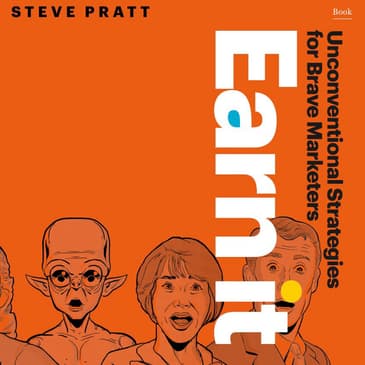
Today, Tod speaks with Steve Pratt, author of the new book “Earn It: Unconventional Strategies for Brave Marketers.” His book is available at https://www.stevepratt.com/book
Steve is the co-founder of the Pacific Content branded podcast company and former head of digital audio at CBC Radio.
.
📰 Get our free daily newsletter
📈 Advertising: Reach Thousands of Marketing Decision-Makers
🌍 Follow us on social media or contact us
.
Get these exclusive benefits when you upgrade:
✅ Listen ad-free
✅ Back catalog of 20+ marketing science interviews
✅ Get the show earlier than the free version
✅ “Skip to story” audio chapters
✅ Member-only monthly livestreams with Tod
And a lot more! Check it out: todayindigital.com/premium
✨ Premium tools: Update Credit Card • Cancel
.
MORE
🆘 Need help with your social media? Check us out: engageQ digital
.
UPGRADE YOUR SKILLS
Google Ads for Beginners with Jyll Saskin Gales
Inside Google Ads: Advanced with Jyll Saskin Gales
Foxwell Slack Group and Courses
.
Today in Digital Marketing is hosted by Tod Maffin and produced by engageQ digital on the traditional territories of the Snuneymuxw First Nation on Vancouver Island, Canada. Associate producer: Steph Gunn.
Some links in these show notes may provide affiliate revenue to us.
Privacy & Opt-Out: https://redcircle.com/privacy
[00:00:01] It is Friday, October 4th. I'm Tod Maffin. Today, a special deep dive episode. They say
[00:00:08] that the world's most valuable commodity is attention. So of course as a marketer, all
[00:00:13] you need to do is get your audience's attention. Problem solved. Actually, the problem is
[00:00:19] that every other marketer, including your competition, are trying to stand out as
[00:00:24] How you earn that attention without alienating your buyers is at the heart of a new book by Steve Pratt
[00:00:31] called Earn It Unconventional Strategies for Brave Marketers. Steve and I worked at CBC Radio,
[00:00:38] Canada's public broadcaster together about 200 years ago. He was director of digital music
[00:00:43] for CBC Radio and head of the CBC Radio 3 network for more than a decade. He then co-founded
[00:00:48] Pacific Content, one of the top branded podcast producers. And though he sounds and is young,
[00:00:55] I'll have you know he once worked for America Online, something that our younger listeners
[00:00:59] may even have to Google to understand the significance of that. He joins me from his
[00:01:03] office in Vancouver. Hello, Steve. Hey, Tod. How's it going? It's good. Steve,
[00:01:07] why do you like charcuterie boards? Great question. I like charcuterie boards as an
[00:01:13] unusual way to convey XY graphs. I love the open to this question. When we had this branded podcast
[00:01:23] company, one of the things we looked for was almost like a very short form recipe for how to
[00:01:30] find success making a podcast from a brand. And our CFO came up with this graph, again,
[00:01:38] very basic XY graph. On the bottom axis was creative bravery, which is our term for are you
[00:01:44] going to make a real show? Are you going to get out of the way and stop making things that are
[00:01:48] about you and instead start making things that are from you that people are looking forward
[00:01:53] to in value? And the Y-axis is the term commitment, which is are you going to act as
[00:02:00] one company and market this thing effectively and put this creatively brave show out into
[00:02:06] the universe in front of the right people in a way that they're actually going to want to sample it.
[00:02:11] And we tried out the idea of how to present this to a client in a restaurant with a
[00:02:19] charcuterie board. So Slack, the messaging app in its early days was our very first client at
[00:02:26] Pacific Content. And we wanted to test run this idea. And so we actually built the
[00:02:31] creative bravery commitment graph out of meat and cheese with a knife and a fork being the XY
[00:02:37] graph on a wooden block in a restaurant. And they loved it. And we kind of ever since then,
[00:02:44] every single session, we had a new client, we opened by putting this giant XY graph
[00:02:49] on a whiteboard. And then as we developed the show and moved through different stages,
[00:02:55] we would keep coming back to the graph and being like, where are we on the graph right
[00:02:59] now? Where's our creative bravery and where is our commitment? And it was a
[00:03:03] a great way of using charcuterie to get people to do better work that earned more attention.
[00:03:08] Can I push back a bit on creative bravery? I feel like every brand
[00:03:13] thinks they're being brave with their creative though. And really what's brave for a
[00:03:18] conservative brand looks very different than what's brave for a more free flowing brand.
[00:03:23] How does the marketer know when they're pushing the boundaries far enough, creatively speaking,
[00:03:27] to move the sales needle without risking damage to the brand?
[00:03:32] Well, I think it's a great question because it is relative to every brand and there's no
[00:03:38] universal scale of creative bravery. I think there's a couple of tests. One is what's
[00:03:43] creatively brave for you could be a way of thinking about it. But really most of it is
[00:03:49] thinking about who the end consumer of the content is, whether it's a podcast or video
[00:03:54] or an email newsletter. Is this something that they're actually going to look forward to
[00:03:59] and appreciate? Is this going to create value for them? Is this something that is coming from
[00:04:04] you but not about you? And I think of a lot of it as a gift, is what is the gift that we can give
[00:04:12] that can only come from us that is intended and designed for the people you're trying to
[00:04:18] reach. If it doesn't feel like it's a gift and it doesn't feel like it's going to create
[00:04:22] value, your marketing is going to be ignored. I mean there's so many things that are vying for
[00:04:27] people's attention all day every day and it's not just marketing, it's everything.
[00:04:33] And I think about it a lot like people have built up almost like these fortresses around
[00:04:38] themselves to protect themselves and to protect their attention. And you have to be really,
[00:04:43] really good to be able to get the past to get led into the gates where it actually gets
[00:04:49] people's attention. And so when you think about creative bravery for you, it's almost like is
[00:04:54] this good enough to get into the attention fortress? Is it going to earn its way in there?
[00:04:59] Because otherwise you're going to be ignored and a lot of the stuff you're making is kind of for
[00:05:02] naught. Yeah, you mentioned in the book your time at America Online where they were using these
[00:05:07] full-screen pop-up ads and then they pulled their users and the users say we hate them and
[00:05:11] it's like yeah well that's great but we're going to keep using them because they work.
[00:05:14] You know it reminded me we have a client in the healthcare sector and one of their ads is
[00:05:18] an older guy with a Southern drawl and he's almost in tears because his client's product
[00:05:22] worked for him and now he doesn't have pain. And we field hundreds of complaints about this ad
[00:05:28] on social media a week from people who see it and they see it a lot because our client is using
[00:05:33] you know there's high frequency there. So when this first started we reported it to our client
[00:05:38] who said sure they hate it but this is our top performing ad of all time in terms of sales.
[00:05:46] We're going to keep running it. Steve who's right here? The consumer or our client?
[00:05:51] You know what I have to say it depends. I don't know what the proportions are of how many people
[00:05:58] they are annoying versus how many people they're finding that are the right people. I would say
[00:06:02] if there's a whole bunch of people being annoyed they're wasting money in some way shape or form
[00:06:07] by targeting the wrong people or they're hitting them over and over again with a message that
[00:06:13] they don't want and I would say my concern if I was talking to your client would be
[00:06:19] there's a lot of people out here that like the thing that you're spending money to put out
[00:06:23] is annoying people and creating a negative brand perception. And when I look at you know if
[00:06:29] you just research a little bit about conversion rates of some of these things I think you would
[00:06:33] probably know better than I would on all the different platforms. A lot of them are kind
[00:06:39] of like sub 1% conversion rates so it's you know to get the 1% or maybe the 1% becomes 2%
[00:06:47] are you willing to annoy or give 98, 99% of the people exposed to it a negative brand impression?
[00:06:55] I just think there's a better option which is why don't you make things that people love?
[00:07:00] You don't have to interrupt people and make things that annoy them. You don't have to
[00:07:06] you know drill the same message in over and over and over again like at some you know sort of
[00:07:12] cult or something like that or a propaganda campaign. You don't need to follow people around
[00:07:17] the internet you know like a private investigator. You can decide to actually make things that
[00:07:25] people want to spend time with and where they're grateful that you made something and there's
[00:07:30] no better you know brand perception or beginning of trust and relationships and eventual customers
[00:07:37] than making things that people really enjoy spending time with. I think one of the questions
[00:07:42] that people could ask themselves more often is at the end of spending time with the marketing
[00:07:48] that we put out would people say that that was time well spent? If they had a chance to do it
[00:07:52] again would they say like yeah I would do that again if I had the choice and I knew
[00:07:56] what I was going to get out of it. It sounds like a lot of people at your client's company would say
[00:08:00] absolutely not. I would actively try and avoid any interaction with that in the future and
[00:08:05] I don't think that does anybody any favors. The fact we're even talking about it is not great
[00:08:10] because you know there's positive word of mouth and then there's if I see that
[00:08:16] friggin ad one more time you know like that there's not a good luck.
[00:08:19] I think I wonder if we'll ever on MetaZad platform or any of these ad platforms
[00:08:22] we've got columns that are conversion rate and frequency and impressions and reach and all that.
[00:08:27] I wonder if our industry needs a metric for I don't know percentage of pissed off?
[00:08:33] Well yeah I think you could flip half the numbers in there of conversion
[00:08:39] to know that the opposite of that is probably people pissed off.
[00:08:43] Yeah or just the wrong people or not the right fit and I think one of the counter
[00:08:48] intuitive things that I talk about a lot is you know if you really zoom out and think about this
[00:08:55] differently some of the core metrics are you know like about reach are you know are worth a second
[00:09:02] look from my perspective anyways. Like I'm always a champion of thinking about time
[00:09:08] and engagement versus reach because the reach number is something that's like easy
[00:09:15] you can just kind of do a spray and pray campaign and just get it out to a lot of people
[00:09:20] but you end up with a lot of people who are not the right people or a lot of people where
[00:09:23] you're annoying them because it's not the again not the right fit. I think there's ways to do
[00:09:28] you know and digital has done a lot better than broadcasting in this space but to be very targeted
[00:09:34] and thinking about value creation for the people you're trying to reach
[00:09:38] where they're actually very pleasantly surprised that they have an interaction with you was
[00:09:42] something that they're looking forward to or grateful that they've spent time with
[00:09:47] and if you're putting content out there and whether it's in you know a video or whether it's a
[00:09:51] podcast looking at metrics like the amount of time that people spend with you or a completion rate
[00:09:58] our signal of whether you're creating value for people or not you know a lot of podcasts
[00:10:03] you can see a completion rate where it's you know again a very basic x y graph but just
[00:10:08] the amount of time in the video or the podcast episode on the bottom and a percentage of how many
[00:10:14] people are still there listening to it or watching it and a lot of things just start shedding audiences
[00:10:21] within the first minute because people are coming in and sampling and figuring out is this going
[00:10:25] to be worth my time and attention am I going to stick around for it and stuff that's mediocre
[00:10:30] or boring or conventional or doesn't have kind of a value proposition right out of the gate
[00:10:35] for it people start leaving and when you start thinking audience first and attention first as a
[00:10:43] kind of an attention strategy for the stuff you're putting out there you can get things where you
[00:10:47] get people like 80 90 95 percent of the way through a piece of content over and over and over again
[00:10:53] where they're spending tons and tons of time with your brand and suddenly they kind of have
[00:10:58] a relationship with you they know who you are they know what you stand for they know what
[00:11:02] your voice is they look forward to hearing from you and when it comes time to become a customer
[00:11:08] when they have a problem that you can solve it's very very likely they're going to choose you
[00:11:12] the people that they've spent lots and lots of time with where you've been generous and created
[00:11:17] something great for them first that they will choose you over your competitors that they
[00:11:23] you know might be getting spammed with on on the internet so all of that is great at some
[00:11:29] point we've got to create the thing though whether it's a podcast or a video ad or a series of images
[00:11:35] in a carousel so you're at the planning table you've got your client or your boss there you
[00:11:40] have an absolutely killer question that I had never thought of and that in fact I don't think
[00:11:44] I've ever heard in a business meeting and as soon as I read it I could see how it could turn
[00:11:49] a creative planning meeting around what is that question the question is uh you know
[00:11:56] insert your medium here would you read this watch this or listen to this if you didn't work here
[00:12:02] and you know would would you tell other people about this if you didn't work here because it's
[00:12:07] so good or so interesting or so valuable um if you really look in the mirror the answer is often
[00:12:13] no uh and it's obvious why because it's usually about you and not from you or it is usually
[00:12:19] designed with your needs at the center of it and you need to have a job to get done
[00:12:25] obviously like there's a marketing job to get done but I think the piece that is missing is
[00:12:30] thinking about like we actually have to earn our way into the conversation to talk about why
[00:12:35] you know why we're interesting or why we're valuable first if if we never get any time or
[00:12:41] attention every again everything is for naught yeah the first chunk of your book is sort of
[00:12:48] about these these broad concepts which I think are really valuable you then get into the production
[00:12:52] side of things how to shoot how to edit and so on um later on in the book but before we get into that
[00:12:57] sort of more tactical part one thing that that I thought was really interesting is that there's a
[00:13:01] there's a form of therapy out there called dialectical behavior therapy um it helps people with
[00:13:06] personality disorders I'm sure you were not merging or suggesting that marketers have
[00:13:12] personality disorders but I think you think that it can help marketers how
[00:13:19] I so yeah so it's a great it's a you know what it's funny because it is for for people like
[00:13:24] personality disorders and also emotional regulation issues and things like that okay so it is for marketers
[00:13:32] it's there just really fabulous skill sets that honestly I like the more I've learned about
[00:13:37] it the more I'm just like this is like a a really valuable set of skills that people suggest
[00:13:41] no period anyways one of the skill sets is called do the opposite or uh you know
[00:13:48] opposite action and it's kind of like if something isn't working for you on an ongoing basis
[00:13:55] or you're actively avoiding something that you know you should be doing do the opposite
[00:14:00] go do the thing that you're actively avoiding doing or do the opposite of the thing that is not
[00:14:05] working and that's always been a really helpful idea for me that I've known kind of in the
[00:14:11] back of my head and you know there's a great Seinfeld episode called the opposite where
[00:14:16] George Costanza decides everything in his life isn't working and he decides to do the opposite
[00:14:21] and ends up you know dating a fabulous woman and getting a new job at the Yankees and all sorts of
[00:14:27] things about it uh that one's kind of a joke but like when you think about a continuing to
[00:14:34] double down on things that are not working or doing things that are the same as everybody else
[00:14:40] or that are not cutting through and giving you the results that you want to do
[00:14:46] leaning into being different and doing the opposite is actually a really good strategy
[00:14:49] a lot of the time and you know we've talked about you know just as one example like
[00:14:54] focusing on time over reach is a fairly big opposite for most marketers.
[00:14:59] All right so we've decided that we're going to uh do something flip things on its head and be
[00:15:04] and do things a little bit more opposite we've decided that we're going to take a chance
[00:15:08] and be creatively brave let's talk about the actual production here and these things usually
[00:15:13] start with the concept of a brand story what is a story? A story is something well I mean
[00:15:21] there's so many different ways you can talk about a story but for me it is a journey towards
[00:15:25] resolving a problem and something where you don't know how it's going to end and you know
[00:15:30] there's when I say a journey that you know it's the structure of a like the most basic
[00:15:36] structure of a story is kind of like there's a quest or a problem to be solved and someone is
[00:15:42] thrown into the mix who's you know often against their will has to go out and try and figure out
[00:15:47] how to solve it and they keep finding escalating challenges that are on their route to trying
[00:15:52] to solve this problem that they must overcome on the journey they're often guides on the
[00:15:56] journey that are going to help them figure out how to overcome those obstacles and at the end
[00:16:01] they either solve it or they don't solve it but they end up changed as a person from having
[00:16:06] gone on the journey and there's often a lesson or a moral that comes out of it. Oftentimes stories
[00:16:12] are a phenomenal way to communicate marketing ideas because you can put ideas like I said
[00:16:19] you know there's a journey that has these obstacles in it that often has a lesson at the end
[00:16:24] stories communicate ideas very very effectively because when you start a story
[00:16:28] and you don't know how it ends we kind of have this need for resolution where we will keep listening
[00:16:35] and being like how is this going to end how's this going to end how's this going to end
[00:16:39] and if there's a core idea you know especially when it is related to your business
[00:16:45] that you're an expert in where you know some of the ideas that you want to convey
[00:16:48] and you can tell them in stories here's how other people have solved these challenges
[00:16:52] or here's compelling ways that people have figured out how to do interesting things
[00:16:55] that might be relevant to our business and to you as a listener or a viewer
[00:17:01] that's a great way to earn attention rather than having experts just talk about ideas or read
[00:17:07] white papers out loud or those sorts of things. Right but how do I make that into a 30 second ad?
[00:17:12] I think there's honestly I think the number one thing the start matters so much is you know
[00:17:18] we talk about attention and you know when I was talking about that that completion graph
[00:17:22] completion rates on where you can just see people sampling and leaving right away if it's not good
[00:17:29] dump people into a story right away like grab their attention with a big hook it's either you know
[00:17:34] the start of a story where you're like I need to know what this ends promise them what they're
[00:17:38] going to get if they stick around. It doesn't have to be massive giant epic stakes like a three
[00:17:44] hour Lord of the Rings thing you can figure out how to tell stories or how to convey an idea
[00:17:49] in any time length I think it has to just be something that is surprising or unexpected
[00:17:54] or breaks a pattern or promises something that you're going to stick around to until the end of it
[00:18:00] that's kind of where your creativity comes in is what's the right format
[00:18:04] for the story we want to tell or the idea we want to convey
[00:18:08] what are our resources what's sustainable for us and what's the right
[00:18:12] way to play to the strengths of each medium so I mean like it sounds you know like this is
[00:18:17] as an example like you know if you wanted to talk about behavioral science in a lot of depth around
[00:18:26] how people make decisions or where our cognitive blind spots are things like that
[00:18:30] that's hard to do in 30 seconds it's a you know some of these things require unpacking and that
[00:18:34] may not be the best choice of medium maybe a podcast or a youtube video or an email newsletter
[00:18:38] might be better suited to that but if you're looking for like I don't know tips for packing
[00:18:45] efficiently on a vacation somewhere from an airline you could do great 30 second stories for that
[00:18:51] on on tiktok or instagram reels you know or threads that are perfectly packaged
[00:18:58] you know and played to the strengths of that medium you know I promise myself I'll never
[00:19:02] watch another mr beast video again not that I don't enjoy them but because I know that I
[00:19:06] will be sucked in for the entire length of it you know as much grief is or as much
[00:19:10] you know of a cliche I think his work has become it is a master class any of his videos are master
[00:19:17] classes in maintaining attention and you show those charts in the book the ones where you know over
[00:19:23] time our people are people dropping off are they staying it all right so we've so we've decided
[00:19:27] that we're going to do something in the opposite we're going to be creatively brave we've got
[00:19:30] our editing down pat we're doing all the right things in the first 30 seconds you've got
[00:19:34] the draft you're sitting in the boardroom you screen it you're ready to go Steve and then
[00:19:40] the CEO walks in and wants to be in it how do you make this work well it's is a good question
[00:19:47] and I'll add one other element to it which is the other caveat to the CEO wants to be in it is
[00:19:55] we'd like to name it after our corporation or have our logo you know as the giant poster art
[00:20:01] for sure yes we're putting out like some big huge you know high executive mandatory that you
[00:20:06] didn't see coming the place that I would always go in in a meeting like that is is your presence in
[00:20:12] this and whether it is the CEO or whether it is your logo or whether it is the name of the
[00:20:17] youtube series or podcast is this going to help people is it going to be additive is
[00:20:23] there going to be an attractive thing that's going to help people decide to say yes I would
[00:20:26] like to sample this show and come in and spend time with you and the answer is more often than not
[00:20:32] no it will be a repellent I like you know this is the this is the really hard truth
[00:20:37] for anyone in marketing and I think particularly in branded content it's a really really hard job
[00:20:43] because you know like the toughest truth is no one wants to hear from you no one is waiting
[00:20:51] to think like I cannot wait to hear the CEO of a large company host a youtube series
[00:20:57] and when you think about the the job that you are hiring this marketing to do is often again
[00:21:03] it's useless if there's no attention is to change the way people feel about your brand
[00:21:09] or your company or to introduce them to ideas that are going to help them become
[00:21:13] a customer or change the way that they think about things in a way that is beneficial to
[00:21:17] to you in your business any barrier that you put in the way that stops people from hitting play
[00:21:25] or opening an email is not doing your business any favors and you know when you in a way when I
[00:21:33] use examples a lot about thinking more like a media company and we'll use examples like
[00:21:37] HBO is a great one because a lot of people know what it is and they kind of associate it with
[00:21:41] with quality storytelling but you could use anybody's favorite show
[00:21:46] and be like oh who makes that show are the executives for that show in there like are
[00:21:51] there HBO executives in Game of Thrones like are there HBO executives starring in
[00:21:57] curb your enthusiasm of course there aren't it would be ridiculous if there were if I could
[00:22:02] with you know it was you know sopran HBO's like no one's going to watch it if it's a kind
[00:22:09] of a thinly veiled infomercial for HBO and yet we all know that HBO put out all these shows and
[00:22:17] we all know that HBO stands for premium storytelling and we all know that HBO HBO does a really good
[00:22:28] job of letting people know about these shows that they're on HBO without having to talk about
[00:22:33] how great HBO is they sell the content and they sell the show they don't sell the people
[00:22:37] making it and again the idea that this is from you not about you it doesn't literally have to be
[00:22:44] from your CEO it has to be something that is a gift from your company so you know some of these
[00:22:49] things I have to say like they're hard truths to talk about but if you're spending lots and lots
[00:22:54] of time and money to put something that you want to have an impact out in the world
[00:23:00] really thinking about again maybe your question is would would you watch or listen
[00:23:05] or read this if it was coming from our CEO versus from somebody else I'll give you one other just
[00:23:13] super quick example because a really great story is an example for this we're really lucky to work
[00:23:20] with Dell Technologies when they first merged Dell with EMC and VMware and a bunch of other
[00:23:26] companies and they wanted to change the brand perception of Dell kind of being a laptops
[00:23:33] and servers company into a company that really understood deeply digital transformation
[00:23:38] and innovation and disruption where they could help companies avoid being ubered in their industry by
[00:23:44] an upstart and they made this you know they had they knew exactly who their audience was it was
[00:23:50] senior IT business decision makers and C-suite executives who were concerned about being
[00:23:56] disrupted and they very clearly did research and knew that those people wanted great stories
[00:24:02] about innovation and disruption told by the people who were actually in their industries
[00:24:06] and companies when it was happening they did not want tips and tricks and listicles and things
[00:24:12] like that and so we designed this show called Trailblazers that was a the history of a different
[00:24:17] industry you know and all the different points of disruption and innovation and
[00:24:21] transformation that happened in it told by the people who were there and the question was
[00:24:26] who's going to host this thing and it could have very easily been Michael Dell Michael Dell
[00:24:31] would have done that he had a huge network he could have got amazing guests he knew his stuff
[00:24:36] inside out he would have been a great great host and the Dell team was brave enough to say like
[00:24:42] that may change the way people see this show let's think about who would be the best person
[00:24:49] period to host this show that is going to get more people to listen to it and that wouldn't
[00:24:53] be a barrier for any reason and we ended up reaching out to Walter Isaacson you know
[00:24:58] the guy who wrote all the biographies of Steve Jobs and Elon Musk and others yeah that guy is an
[00:25:05] objective amazing journalist who's associated deeply with innovators and understanding stories of
[00:25:11] innovation he hosted the show and did an amazing job and it ended up like this podcast that came
[00:25:17] from Dell Technologies has ended up as curriculum in business programs at universities because
[00:25:23] it's a real show and one step further if you look at the logo for the show Trailblazers with Walter
[00:25:31] Isaacson there's a very big thing missing there is no Dell logo anywhere on there uh you know
[00:25:37] you can see in the metadata it's from Dell like they're the producers of it exactly the same way
[00:25:43] you would know that like if something came out it was from HBO and to me that is the other
[00:25:49] way that I talk to people when they come in a room and being like let's put our CEO in here
[00:25:53] is to talk about the examples that are really successful of big companies that have had massive
[00:25:58] success by doing the exact opposite of that um and it's almost like when you set the table stakes
[00:26:05] of like this is how to do it properly and here's a whole bunch of examples of all these big
[00:26:09] companies that you probably know and love doing it this way it makes it really hard to be like
[00:26:14] I'd still like to be in the spotlight and be the host of this show
[00:26:18] and to use a vernacular of your book that's the gift I guess that you're giving the audience is
[00:26:22] it is it respectful of their time and and its actual value yeah exactly you nailed it
[00:26:27] we're coming up on our time Steve but I have one last question part of your book includes a section
[00:26:32] on how to interview someone correctly my last question Steve how badly did I fuck this up
[00:26:39] you have done I gotta say you've done a great job I'm not surprised at all about this but
[00:26:44] you've done your research you've read the book yeah you came prepared with actual questions
[00:26:49] that were really smart and insightful and it made me think a lot like opening with charcuterie board
[00:26:55] boom like that like I'm just gonna call that one out as that's a weird first question
[00:27:01] that will earn people's attention I hope because it's it's that plans a thing like why are you
[00:27:08] asking about a charcuterie board at the top of a podcast about marketing and a book about
[00:27:12] marketing this is the sign of a journalist pro come on all right that's too many compliments
[00:27:16] as a canadian I'm gonna edit all this out Steve thank you for joining me thanks for having me
[00:27:22] Steve Pratt is the author of earn it unconventional strategies for brave marketers it is available
[00:27:28] now wherever you get your books that will do it for the week today in digital marketing is
[00:27:33] produced by engage q digital on the traditional territories of this new name at first nation
[00:27:37] on Vancouver Island our associate producer is the intrepid stef gun our production coordinator
[00:27:42] is Sarah gild ad coordination by red circle mark bluvvis is the satisfying click your phone makes
[00:27:47] when you lock it I'm Todd Maffin thanks for listening have a restful weekend friends I'll
[00:27:53] see you on Monday