
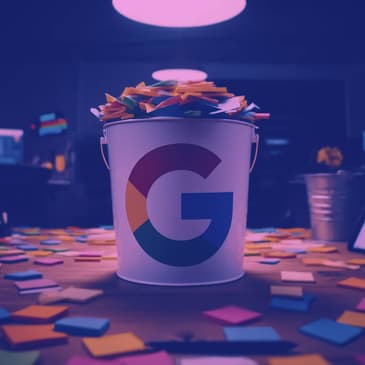
Why is Google dumping up to three-quarters of your ad results into an unmarked bucket? HubSpot is about to get more expensive. Finally, a framework for data deletion requests. And Microsoft's change to shopping campaigns is coming whether you want it or not.
Contact Us • Links to today’s stories
📰 Get our free daily newsletter
📈 Advertising: Reach Thousands of Marketing Decision-Makers
🌍 Follow us on social media or contact us
Get these exclusive benefits when you upgrade:
✅ Listen ad-free
✅ Back catalog of 20+ marketing science interviews
✅ Get the show earlier than the free version
✅ “Skip to story” audio chapters
✅ Member-only monthly livestreams with Tod
And a lot more! Check it out: todayindigital.com/premium
✨ Already Premium? Update Credit Card • Cancel
MORE
🆘 Need help with your social media? Check us out: engageQ digital
📞 Need marketing advice? Leave us a voicemail and we’ll get an expert to help you free!
⭐ Review us
UPGRADE YOUR SKILLS
Google Ads for Beginners with Jyll Saskin Gales
Inside Google Ads: Advanced with Jyll Saskin Gales
Foxwell Slack Group and Courses
Today in Digital Marketing is hosted by Tod Maffin and produced by engageQ digital on the traditional territories of the Snuneymuxw First Nation on Vancouver Island, Canada.
Some links in these show notes may provide affiliate revenue to us.
Privacy & Opt-Out: https://redcircle.com/privacy
[00:00:00] It is Wednesday, June 5th. Today, why is Google dumping up to three quarters of your ad results
[00:00:07] into an unmarked bucket? HubSpot is about to get more expensive. Finally, a framework
[00:00:13] for dated deletion requests and Microsoft's change to shopping campaigns is coming. Whether
[00:00:20] you want it or not. I'm Tod Maffin. That's ahead, today in Digital Marketing.
[00:00:27] Today or Wednesday, our Google Ads correspondent Jill Saskin-Gales joins me. Jill spent six
[00:00:32] years at Google Ads and now runs the Inside Google Ads training program for practitioners.
[00:00:37] If Google Ads isn't relevant to your day-to-day work, premium members, you can just skip to
[00:00:41] the next chapter by tapping the next story or if you're not a premium member, skip
[00:00:45] to about the seven minute and five second mark. Jill, hello.
[00:00:48] Hello.
[00:00:49] It's been a couple of weeks since Google's big marketing live event. And one of the
[00:00:53] things that they like to talk up at these events is just how much transparency and control
[00:00:58] they're giving advertisers. And then out the back door, they're removing controls,
[00:01:04] putting more things into the black box. Am I just a grumpy old man? Is that your sense
[00:01:09] too?
[00:01:10] Well, you may be a grumpy old man, but I do share the same sense with you. Google
[00:01:15] announced some more transparency and control features coming to Performance Max, for
[00:01:20] example, more asset group reporting, more opportunity to add exclusions. But on the whole,
[00:01:25] if you're a Google Ads practitioner in 2024, you have way less transparency and control
[00:01:30] over your campaigns than you even did in, let's say, 2020.
[00:01:34] Can you give me a couple of examples of that? How have we been losing control in Google
[00:01:37] Ads over the last few years?
[00:01:39] I think one of the big ways is actually the other search terms. So when you run
[00:01:44] a search campaign, you enter your keywords into Google Ads and then you check your
[00:01:49] search terms report to see which user searches actually match to your keywords.
[00:01:54] And usually you would be able to actually see those search terms and add negatives
[00:01:57] and optimize based on it. But now, due to privacy, according to Google, a lot of
[00:02:03] those search terms you're advertising on, you can't actually see. And with some
[00:02:07] of my coaching clients, I can see that as much as 50% or even 75% of their
[00:02:13] search ad spend is going to other search terms that they can't even see so
[00:02:17] they don't even know what they're advertising on.
[00:02:19] Is this similar to when Google Analytics, you know, back in the day, Google
[00:02:23] Analytics, you'd be able to see every keyword, everything that came in. And
[00:02:27] then one day they just basically deleted all of them and put them... What was
[00:02:32] the key word they use? Like not provided or not available or something?
[00:02:35] Like all of a sudden all of them disappeared. Is this kind of the
[00:02:37] same thing on the ad side?
[00:02:39] It's a similar kind of idea. I'm not familiar with the specifics of
[00:02:42] the Google Analytics example. But in the last, I'd say five or so years,
[00:02:47] Google has become much more conscious of user privacy, thinking about
[00:02:51] privacy thresholds. Another example of this is back in 2017 or so, you
[00:02:57] could advertise to people based on words in their Gmail inbox. So you
[00:03:02] could keyword-based advertise based on the emails people had. You cannot
[00:03:06] do that anymore.
[00:03:08] Was it effective though? I mean, privacy issues aside.
[00:03:11] Highly effective. The clients I worked with at Google who used this, you
[00:03:15] could advertise to people who you know were getting emails from your
[00:03:17] competitors. There were lots of really creative ways to use that when
[00:03:22] Gmail's were their own separate campaign type. Now Gmail has been
[00:03:25] brought under the umbrella of demand and a performance max. So you can
[00:03:28] use audience targeting. But it's not quite the same as targeting ads
[00:03:32] based on what people have in their inbox.
[00:03:36] Is it unfair for me to call this a scam? Like Google has you
[00:03:40] paying ostensibly to advertise on searches that you pick, but you
[00:03:44] can't actually see those searches?
[00:03:46] Yeah, there are definitely folks in the industry who especially after
[00:03:50] all the news Google has had recently about the way they may
[00:03:54] have misled SEOs or the DOJ case about bid floors and things. So
[00:03:59] some people think like, oh, which is the way to get you to
[00:04:01] advertise on garbage and ignore your negative keywords. We
[00:04:04] have no way to prove or disprove that. What I can say as someone
[00:04:07] who worked there is like, that's not the Google I know. And I
[00:04:10] think on the whole Google does intend to do right by its
[00:04:13] advertisers. Is it because of privacy or some other reason? I
[00:04:17] don't know. But if you're someone who has not checked your
[00:04:19] search terms report in a while, or maybe you have but you've
[00:04:22] never scrolled down to the bottom to see that other
[00:04:24] search terms line, you're gonna want to check, you know, I
[00:04:27] was on a coaching call yesterday. And my client,
[00:04:30] actually their other search terms performed way better than
[00:04:33] their search terms. So you know, not so concerned
[00:04:36] but then a client call I had last week, their other search
[00:04:39] terms performed way worse than the search terms we could see. So
[00:04:43] it's definitely worth looking into and ultimately you have to
[00:04:46] rely on something like your bid strategy to guide Google
[00:04:50] whether it's search terms you can or can't see towards the
[00:04:53] outcomes you want to achieve.
[00:04:54] I wonder if this is in the long run, a good thing. Because
[00:04:58] you know, like, I mean, one of those sort of debates, I
[00:05:01] think in the digital marketing space is that when AI first
[00:05:05] entered the media buying space, it was terrible. Now I think
[00:05:09] most people have accepted that, you know, AI, especially around
[00:05:12] targeting, especially around generating audiences, much less
[00:05:15] so on the creative side. But, you know, the targeting part has
[00:05:18] actually done pretty well. And I, you know, I'm not as familiar
[00:05:22] with Google as I am with Meta. But I would say most senior
[00:05:24] Meta media buyers have said that it actually performs a
[00:05:28] little bit better than when the marketers got their hands,
[00:05:31] you know, the human has got their hands in kind of
[00:05:33] micromanaging stuff. Is that, do we see that in this kind of
[00:05:38] big mysterious lumped other search terms?
[00:05:42] I guess yes with asterisk. So like, yes, the automation,
[00:05:45] whether it's optimized targeting or the search terms you
[00:05:48] can't see or running a Pmax campaign, like yes, the AI
[00:05:52] and automation can do better targeting than humans if
[00:05:55] given the right information. And that's the gap that I
[00:05:58] think, you know, Google product managers have a blind
[00:06:01] spot around. Because in many cases, with your small
[00:06:04] business owners or your small budget accounts, you know,
[00:06:07] they don't have the correct data feeding in or complete
[00:06:09] data feeding in if you're a lead gen advertiser, you may
[00:06:12] not have the full funnel leading in, you may not have
[00:06:14] conversion tracking set up, you may not be sharing
[00:06:16] first party audiences. So when all those foundations of
[00:06:19] the account are in place, the AI has the data it
[00:06:22] needs to drive good results for you. But so
[00:06:24] frequently for so many different reasons, we don't
[00:06:26] live in an ideal world. And so you don't have all
[00:06:28] those fundamentals in place. So the AI doesn't have
[00:06:31] the correct data to work off of. And as a result,
[00:06:33] it's not able to drive the best results for your
[00:06:36] business. So I don't think that's Google's fault. You
[00:06:38] know, AI does exactly what we tell it to do. But at
[00:06:41] the same time, it's not the business owner's fault
[00:06:44] either that they can't properly implement these
[00:06:46] things that are really complicated.
[00:06:48] Yeah, fair. Okay, Joe, thank you.
[00:06:49] Thank you.
[00:06:50] Joe Saskin Gales is our Google ads correspondent.
[00:06:52] She's here every second Wednesday. You can learn
[00:06:55] more about her Google ads training program at
[00:06:57] our affiliate link at b.link slash GA training.
[00:07:06] New data from Bright Edge confirms what we reported
[00:07:09] yesterday that Google has quietly pulled way back
[00:07:12] on its AI summaries. Those summaries sit at the
[00:07:15] top of the search results page and were the big
[00:07:17] star at Google's recent IO event. But since
[00:07:20] launch users found it giving nonsensical and
[00:07:23] sometimes dangerous answers. And marketers said
[00:07:25] it was all but plagiarizing their web pages
[00:07:28] with only a tiny credit link. Google responded
[00:07:32] by saying essentially working as intended and
[00:07:35] blaming media outlets for reporting on outlying
[00:07:37] searches that don't get a lot of queries. That
[00:07:39] said, clearly the attention spooked Google
[00:07:42] with Bright Edge finding that now fewer than
[00:07:45] 15% of queries have that AI overview on them.
[00:07:50] Compare that to when they rolled it out. That
[00:07:51] number was almost 85%. So when do the
[00:07:55] summaries show up now? Bright Edge says
[00:07:57] there are a few things that make it more likely
[00:07:59] for them to trigger. There are almost three
[00:08:01] times as likely to show up when featured snippets
[00:08:04] are also on the page. They're also more likely
[00:08:07] to show up when the search query is a question.
[00:08:10] As for what keeps them away, so far questions
[00:08:12] about local topics or businesses are the
[00:08:15] least likely to have AI overviews and site
[00:08:18] links are also less likely to trigger an AI
[00:08:21] overview, presumably trying to keep the risk
[00:08:23] of providing inaccurate information about brands
[00:08:25] down. Bright Edge also looked at how often
[00:08:28] AI summaries now show up based on industry.
[00:08:31] 63% of keywords in health care will trigger
[00:08:35] an AI overview in B2B tech. 32% of keywords
[00:08:39] will in e-commerce. 23% restaurants and
[00:08:44] travel tend to barely show any.
[00:08:51] It's going to cost more to use the popular
[00:08:52] marketing platform HubSpot, the company
[00:08:54] announcing higher fees for payments
[00:08:57] processed through their commerce hub. It'll
[00:08:59] also increase its surcharge on payments that
[00:09:02] go through Stripe. Specifically, the current
[00:09:05] HubSpot clearing fees are 0.5%. That's
[00:09:08] moving to 0.8%. The commerce platform
[00:09:11] itself was free. Not anymore. It will have
[00:09:14] an additional 0.5% fee to use it. And if
[00:09:18] you're using Stripe, you'll of course be
[00:09:20] paying Stripes fees plus HubSpot's
[00:09:22] surcharge, which moves from a half
[00:09:24] percentage point to three quarters of a
[00:09:26] point. There is a way to hold off this
[00:09:29] increase a bit if you are using HubSpot
[00:09:31] payments by June 20th. They say they will
[00:09:34] push that fee increase back a year for
[00:09:36] you. To mother updates, a new vertical
[00:09:38] sidebar navigation replaces the old top
[00:09:41] drop down menus, which might make it
[00:09:43] easier to navigate. Users can now add
[00:09:45] up to four custom fields to invoices.
[00:09:48] They've introduced navigation bookmarks
[00:09:50] so you can keep most of your frequently
[00:09:52] used tools close at hand. For email
[00:09:54] metrics, HubSpot now separates bot
[00:09:57] included and bot excluded metrics, which
[00:10:00] should provide a more clear picture of
[00:10:01] actual human engagement. And leaders
[00:10:04] can now manage approvals directly from
[00:10:06] their mobile devices and super
[00:10:07] admins are gaining more control over
[00:10:10] feature release timing.
[00:10:16] It's easy to lose track of the big
[00:10:18] picture when you have to open a new
[00:10:19] window for every detail. With Miro, you
[00:10:23] can bring everything and everyone
[00:10:25] together in one place, consolidate
[00:10:28] different points of view and increase
[00:10:30] team collaboration all on one
[00:10:32] centralized board. We used Miro at our
[00:10:35] agency to map out a customer journey
[00:10:36] map for one of our clients. And with
[00:10:38] the help of their huge template
[00:10:40] library, we were up and running in
[00:10:42] minutes. And the built in commenting
[00:10:44] features helped us tweak it without
[00:10:46] a million back and forth emails. Find
[00:10:49] simplicity in your most complex
[00:10:51] projects with Miro. Your first three
[00:10:54] Miro boards are free when you sign up
[00:10:56] today at Miro.com slash podcast. That's
[00:11:00] three free boards at M I R O dot com
[00:11:05] slash podcast. Digital marketing
[00:11:08] professionals, if you're planning
[00:11:09] your next big online campaign or
[00:11:11] launching a new client project, you'll
[00:11:13] be in need of a new domain. Dynadot
[00:11:15] is here to provide you with a
[00:11:17] streamlined, affordable domain name
[00:11:19] solution with transparent, competitive
[00:11:21] pricing, an emphasis on security and
[00:11:24] free privacy protection. Registering
[00:11:26] a domain has never been easier. They
[00:11:28] also offer a no coding required
[00:11:30] drag and drop free website builder to
[00:11:33] quickly assemble landing pages for
[00:11:35] your marketing initiatives along with
[00:11:36] a free branded email address to
[00:11:38] conduct any outreach you need. Take
[00:11:41] advantage of their advanced domain
[00:11:43] search and over 500 domain
[00:11:46] extensions to ensure your marketing
[00:11:48] strategies are built on a strong
[00:11:49] foundation. Make Dynadot your go to
[00:11:53] domain registrar and start saving
[00:11:55] today at Dynadot dot com slash
[00:11:58] marketing. That's D Y N A D O T
[00:12:03] dot com slash marketing. YouTube
[00:12:06] continues to hand out features that
[00:12:07] used to be locked behind minimum
[00:12:08] subscriber counts and this latest
[00:12:10] escapee could be a pretty solid
[00:12:12] tool for your brand's social media
[00:12:14] efforts. In addition to videos, you
[00:12:16] can also post text updates like you
[00:12:18] might on Facebook. They're called
[00:12:20] community posts on YouTube and you
[00:12:22] can add polls as questions get
[00:12:24] comments from it that kind of thing.
[00:12:26] Previously, you had to hit a
[00:12:26] subscriber count threshold. Now
[00:12:28] YouTube in its weekly update video
[00:12:30] says that soon everyone will have
[00:12:32] access to it. These posts show up
[00:12:34] on the subscriber feed and
[00:12:36] occasionally in the main feed.
[00:12:37] Users can also find them on channel
[00:12:39] pages under the community tab.
[00:12:41] This might take a couple of weeks to
[00:12:42] get to all accounts, but it is on the
[00:12:44] way. They've also revamped the
[00:12:45] research tab in YouTube Studio
[00:12:47] Analytics to provide some
[00:12:48] recommendations for new video
[00:12:49] ideas. They've also renamed that
[00:12:51] tab from research to inspiration.
[00:12:54] One of the elements there will be
[00:12:56] what they call breakout videos.
[00:12:57] These are videos from similar
[00:12:58] channels to yours that have
[00:12:59] performed well. There's also a new
[00:13:01] kind of inspo search engine there
[00:13:03] you type in a topic and it'll
[00:13:04] spit out some ideas based on what
[00:13:06] it thinks your viewers would
[00:13:07] respond to this new inspiration
[00:13:10] tab should now be available to
[00:13:12] everyone everywhere except the
[00:13:14] EU, the UK, Switzerland and
[00:13:16] India. YouTube says it's planning
[00:13:18] to get it global soon.
[00:13:24] Microsoft will be moving all your
[00:13:26] smart shopping campaigns to its
[00:13:28] version of performance max in the
[00:13:29] next few months. If this is
[00:13:31] something you want to do now for
[00:13:32] some reason you can force the
[00:13:33] update by looking for upgrade to
[00:13:36] performance max under edit.
[00:13:38] Microsoft says all the related
[00:13:40] bits should stay the same set
[00:13:42] up reporting performance history.
[00:13:43] All that should carry over.
[00:13:45] What won't carry over though is
[00:13:46] your campaigns learning data.
[00:13:48] The company says you can expect a
[00:13:50] new learning period to last up
[00:13:51] to two weeks after the move.
[00:13:54] A few other small updates their
[00:13:55] ad platform now speaks Thai
[00:13:56] Turkish Korean Russian Dutch
[00:13:58] and Filipino as we reported
[00:14:00] yesterday video and connected
[00:14:02] TV ads are now in their ads
[00:14:03] editor including Netflix's
[00:14:05] inventory. You can now use
[00:14:07] generative AI to create an edit
[00:14:08] graphics for your display ads
[00:14:10] and they have started putting in
[00:14:12] some audiences specifically
[00:14:13] honed for the upcoming Olympics.
[00:14:20] If you've ever tried to get your
[00:14:21] website compliant with privacy
[00:14:23] legislation you'll know it's a
[00:14:25] lot harder than it seems.
[00:14:27] Do you use the European version
[00:14:29] with its buttons or the American
[00:14:31] version with its don't use my
[00:14:33] data link and which
[00:14:35] American version the California
[00:14:37] one do you even know the
[00:14:38] differences.
[00:14:40] The interactive ad bureau recently
[00:14:41] released what it hopes will be
[00:14:42] a standard a new dated
[00:14:44] deletion request framework
[00:14:46] quoting Martek quote it lays out
[00:14:48] how to validate request
[00:14:50] origins ensure request or
[00:14:51] authenticity confirm receipt
[00:14:53] and employ cryptographic
[00:14:54] signatures for authentication.
[00:14:57] Its solution for handling data
[00:14:58] deletion requests means the
[00:15:00] framework aligns with the right
[00:15:02] to delete a data subject
[00:15:03] right protected by the GDPR
[00:15:05] 16 US state privacy laws
[00:15:08] and additional privacy
[00:15:09] legislation including Quebec
[00:15:12] law 25 unquote.
[00:15:14] The Martek piece noted it's a
[00:15:15] little frustrating to see the
[00:15:16] private sector having to step
[00:15:17] in when this is something
[00:15:18] governments could create and
[00:15:20] mandate.
[00:15:21] The IAB says they can provide
[00:15:23] implementation support and
[00:15:24] guidance from their tech lab
[00:15:25] team.
[00:15:27] That is it for today.
[00:15:28] I'm Todd Maffin.
[00:15:29] Thanks for listening.
[00:15:30] See you tomorrow.
[00:15:34] This is the story of the
[00:15:36] wand as a maintenance
[00:15:37] engineer he hears things
[00:15:39] differently to the untrained
[00:15:40] ear everything on his shop
[00:15:42] floor might sound fine
[00:15:44] but he can hear gears
[00:15:45] grinding or a belt slipping
[00:15:47] so he steps in to fix the
[00:15:49] problem at hand before it
[00:15:50] gets out of hand and he knows
[00:15:52] Granger's got the right product
[00:15:54] he needs to get the job done
[00:15:55] which is music to his ears
[00:15:57] call click Granger.com or just
[00:15:59] stop by Granger for the ones
[00:16:02] who get it done.