
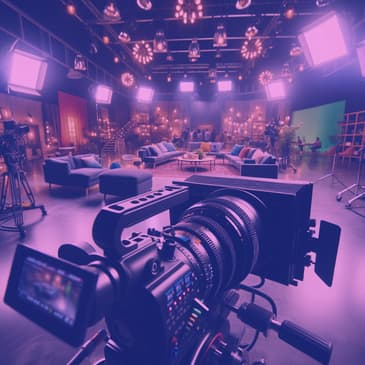
There are a lot of things to consider when you make a product video, or a promotional video for your company. Do we make it look polished? Or go with the amateur look popular on TikTok? Do we focus the viewer’s attention? Or employ the one-cut-every-second technique? Well, add one more to the list: Whether you should show your products being used in slow motion.
Anika Shtuppy is an Assistant Professor of Marketing at Tilburg University. She and her colleagues recently published some research looking at that very question, and she joined Tod for an extended discussion.
We're looking for a writer and production assistant! LEARN MORE HERE.
📰 Get our free daily newsletter
📈 Advertising: Reach Thousands of Marketing Decision-Makers
🌍 Follow us on social media or contact us
Links to all of today’s stories here
Listen to NerdWallet’s Smart Money podcast on your favorite podcast app. “Future You” will thank you.
Get these exclusive benefits when you upgrade:
✅ Listen ad-free
✅ Back catalog of 20+ marketing science interviews
✅ Get the show earlier than the free version
✅ “Skip to story” audio chapters
✅ Member-only monthly livestreams with Tod
And a lot more! Check it out: todayindigital.com/premium
✨ Already Premium? Update Credit Card • Cancel
MORE
🆘 Need help with your social media? Check us out: engageQ digital
📞 Need marketing advice? Leave us a voicemail and we’ll get an expert to help you free!
⭐ Review us
UPGRADE YOUR SKILLS
Inside Google Ads with Jyll Saskin Gales
Google Ads for Beginners with Jyll Saskin Gales
Foxwell Slack Group and Courses
Some links in these show notes may provide affiliate revenue to us.
Today in Digital Marketing is hosted by Tod Maffin and produced by engageQ digital on the traditional territories of the Snuneymuxw First Nation on Vancouver Island, Canada.
Privacy & Opt-Out: https://redcircle.com/privacy
[00:00:00] It is Thursday, March 28th and today our agency is doing a full team offsite retreat so
[00:00:08] no regular episode but in its place some new data from the world of marketing science.
[00:00:15] There are a lot of things to consider when you make a product video or a promotional video
[00:00:19] for your company.
[00:00:20] Do you make it look polished or go with the amateur look popular on TikTok?
[00:00:25] Do we focus the viewer's attention or employ the one cut every second technique?
[00:00:31] Well add one more to the list whether you should show your products being used in slow motion.
[00:00:38] Anika Stuppi is an assistant professor of marketing at Tilburg University.
[00:00:42] She and her colleagues recently published some research looking at that very question
[00:00:46] and she joins me from our office in Düsseldorf, Germany.
[00:00:49] Dr. Stuppi welcome.
[00:00:50] Hi Tod thanks for having me.
[00:00:52] At all you studied how slow motion affects consumer behavior but what behavior exactly purchases
[00:01:01] sharing a warm fuzzy feeling?
[00:01:03] So we look at slow motion as mostly a social media phenomenon so we're interested really
[00:01:09] in behaviors related to sharing of videos, number of views, likes, commenting.
[00:01:18] So that is the predominant group of outcomes that we're looking at.
[00:01:24] But we were also interested in how slow motion might work to precision products.
[00:01:30] So in one of us or two in our studies actually we also measure how slow motion imagery makes
[00:01:36] a brand more likeable and increases consumers willingness to pay.
[00:01:40] I wasn't interested in that you had a number of experiments in your study and one in particular
[00:01:44] as you mentioned tested whether a brand or whether people liked a brand more after
[00:01:50] seeing videos from that brand in slow motion.
[00:01:52] I could see how it would be easy to study whether someone likes a product more because
[00:01:56] you just measure purchases or likes or shares but can you walk us through how that tested
[00:02:01] worked of how people like to brand more after seeing videos from that brand in slow motion
[00:02:08] and what you learned?
[00:02:10] Yes, so a really important phenomenon in marketing is that if you use images or music
[00:02:18] or just anything that create that positive emotions and people right and you put a brand
[00:02:23] right next to it or product right next to it these positive emotions kind of rub off on the
[00:02:29] product of the brand over time as you repeatedly show brand and the positive image for instance
[00:02:38] simultaneously so that is exactly what we did in that study too right so we show the slow motion
[00:02:43] videos off this was actually baseball players dunking together with the logo of the sports brand
[00:02:52] and over time.
[00:02:53] Do you mean basketball players?
[00:02:54] Yes, basketball players dunking right so in slow motion or in regular speed
[00:03:00] and then after we pair the brand and these videos for about six times we then measured liking
[00:03:06] for the brand and then we indeed find that brand liking is higher when slow motion videos were
[00:03:12] shown together with the brand because slow motion is pleasant to watch.
[00:03:18] And how did you test the connection with the brand in particular like how how did that experiment work?
[00:03:23] So participants were seeing on the computer screen the brand logo on one side and the video
[00:03:32] on the other side right and this was either slow motion or regular speed video which we varied
[00:03:39] from person to person right was randomly assigned in the experiment and then they had these
[00:03:44] exposure multiple times and then at the very end of the study we showed just the brand logo
[00:03:48] and asked people how much do you like this brand would you be interested in or willing to buy shoes
[00:03:54] of this brand and those measures showed that the slow motion increased brand liking and also
[00:04:02] willingness to pay for shoes of the brand.
[00:04:06] How did you control for people who may have just not liked that brand to begin with before they
[00:04:11] even walked into your experiment?
[00:04:13] So we used very unfamiliar brands to kind of eliminate that problem that people have prior
[00:04:20] to see Asians with a brand so these were very underdog European sneaker brands and we used an
[00:04:26] American panel to collect the data which didn't notice.
[00:04:31] Right, I see. So these are brands that they wouldn't have known ahead of time.
[00:04:35] That makes sense.
[00:04:35] Exactly.
[00:04:36] So that's the connection with brands.
[00:04:38] Let's talk about sort of the main area of your study which was when people see a marketing
[00:04:43] video in slow motion.
[00:04:45] How did that affect their behavior on social media with that actual piece of content with that video?
[00:04:52] Yes, so the context that we looked at was a gift sharing platform.
[00:04:58] So I'm saying gift not just I know this is the debate but I prefer to give
[00:05:04] and on this gift platform people could upload gifts and then share them comment like the gift
[00:05:13] and each gift has a tag attached to it which denotes the topic that is shown but also whether
[00:05:19] the video is at the gift is in slow motion for instance.
[00:05:22] Right, and what we could then do is we could basically look at the behavior of people
[00:05:32] the slow motion gifts right and the behavior that was associated with those and compare it
[00:05:36] with a number of control gifts that were not in slow motion.
[00:05:42] And that analysis kind of showed what we predicted right the slow motion gifts go more viral
[00:05:48] on this platform. People watch them more like them more, comment on them more.
[00:05:53] I know you tested gifts or gifs and not actual like promotional videos but do you think that
[00:05:58] there's a parallel? Do you think that your the results would have been the same if your study had
[00:06:03] studied people's experience with actual slow motion videos as opposed to slow motion gifs?
[00:06:11] Yes, absolutely. I think ultimately right slow motion is a tool that can make an ad more visually
[00:06:22] appealing right more aesthetically pleasing so what works for gifs should also work for
[00:06:28] for commercials. It's just harder to study this topic in the setting of commercials right because
[00:06:35] not that many around that use the slow motion effect and they're like big other differences between
[00:06:41] commercials right which brand is promoted etc. So the gift context was one where we could study
[00:06:48] this more easily and more cleanly. Was there a difference between different types of products
[00:06:54] being offered? Like I'm thinking would looking for an exciting ski adventure be different than
[00:07:00] someone wanting a relaxing spa vacation? Yes, that's a very good point so we predict right at
[00:07:09] slow motion creates this positive feeling when we watch it because it's easy to
[00:07:17] easy to understand the movement right to slow down movements makes it easy for us to take in
[00:07:21] all the visual input and we like this easy watching experience. And indeed right this should
[00:07:29] especially work well for products right that are hedonic or that we consume for pleasure right
[00:07:34] that are actually about this these nice emotions that consumers should associate with the
[00:07:42] with the brand. Indeed we show that actually in the setting where of looking for vacations that
[00:07:48] are either relaxing or exciting slow motion works better for consumers to seek a relaxing vacation
[00:07:57] because the excitement seeking is kind of misaligned with slow motion being pleasant so much.
[00:08:05] So actually for the exciting right to create excitement and thrill it's actually
[00:08:13] recommended to other speed up movement because that is associated with a rousal
[00:08:19] and creating a sense of thrill and excitement. Right I guess if someone is you know interested
[00:08:24] in playing a fast paced game of social racket ball they're going to want to see it in in fast you
[00:08:30] know and so on. What about positive content versus negative content like I'm thinking about like
[00:08:35] an ad about the dangers of drunk driving when someone is shown being tossed around in a car you know
[00:08:42] that's that's a negative promotional advertising. Did you test the difference between positive
[00:08:48] content and negative content. Yes we did and we found that for slow motion has the potential to
[00:08:57] kind of amplify the valence of the content that is shown so slow motion makes pleasant movements
[00:09:05] more beautiful because we see all the details of a subtle dance performance for instance but when
[00:09:12] the movements are aversive the exact opposite happens right now the consumer gets to see a
[00:09:17] versive disturbing content and slow motion so that actually amplifies the negative feelings
[00:09:26] that such a commercial creates. I think of a drunk driving campaign or a bloody bloody boxing match
[00:09:33] where people are getting hurt. Slow motion makes that more difficult to watch which can sometimes
[00:09:39] align with the intentions of marketers right. And yet some things that are positive in slow motion
[00:09:44] didn't work. I thought it was interesting your paper noted that some slow motion can still hurt
[00:09:49] a company's marketing even if it is a hedonic as you would say use for pleasure when people saw
[00:09:54] TV ads for instance this is not your research but some past research when people saw TV ads with
[00:10:00] someone eating chocolate in slow motion or shampooing their hair in slow motion consumers actually
[00:10:06] didn't like that they found it to be fake why would that slow motion hurt marketing while slow
[00:10:12] motion on social media as opposed to TV commercials in those previous examples would help.
[00:10:18] Yes so this effect where slow motion makes the ads seem fake or post right that is very specific
[00:10:27] to commercials in which actors express some kind of utility right that they get from the consumption
[00:10:36] so the smile after each chocolate in slow motion seems more fake because people think when the
[00:10:42] action is slowed down that you are more acting out is enjoying and really truly feeling it
[00:10:51] the same with the woman shampooing her hair right so she like strokes her hair and is excited
[00:10:57] about the softness of the conditioning right that enjoyment right seems fake when the smile is in
[00:11:06] slow motion so this is just very specific type of ads that we all know right from shampoo commercials
[00:11:12] it does make sense you know I'm thinking like if I was watching an actor eating chocolate and then
[00:11:17] in slow motion he slowly turns his head to the camera and slowly creeps the smile on his face I'm
[00:11:23] thinking this guy's faking it this is acting that's very interesting yeah exactly exactly so these are
[00:11:29] not the settings we look at right we look at natural movements being filmed not people express some
[00:11:36] kind of enjoyment in slow motion putting our podcast and newsletter together can get complicated
[00:11:42] we had show notes in one place interview coordination in another brainstorming somewhere else
[00:11:48] it's easy to lose track of the big picture when you have to open a new window for every detail
[00:11:54] with Miro you can bring everything and everyone together in one place consolidate different points
[00:12:00] of view and increase team collaboration all on one centralized board for instance we used Miro
[00:12:07] to figure out the right flow for our newsletter automations it'll let us get our team all contributing
[00:12:12] including our ad agency people and save us a ton of time and it's new AI tool which summarizes
[00:12:19] and clusters information automatically was a game changer find simplicity in your most complex
[00:12:25] projects with Miro your first three Miro boards are free when you sign up today at miro.com slash
[00:12:33] podcast that's three free boards at miro.com slash podcast
[00:12:41] today's episode is sponsored by nerd wallets smart money podcast nerd wallets trusted financial
[00:12:46] journalists use fact-based reporting for some much needed clarity in the finance world helping
[00:12:52] you make smarter decisions with your money and if you like the format of this podcast you will love
[00:12:57] theirs it's packed with information but it's brief last week they had a great run down on car
[00:13:02] prices not just the numbers but why car prices moved how weather affects that market it was
[00:13:07] super interesting they also cover things like boosting your credit score putting money away for
[00:13:12] retirement saving on travel and so on so yeah listen to nerd wallets smart money podcast on your
[00:13:18] favorite podcast app future you well thank you how does the complexity of a video's content change
[00:13:26] the way consumers react with it on social media yeah because the point so the right idea we had
[00:13:32] as what slow motion is more enjoyable to watch for people because it really unpacks these movements
[00:13:39] that we typically don't get to see in real time right the this pleasure water drop makes when
[00:13:45] it hits hits the surface so it slows down the visual input right and then we can appreciate
[00:13:53] all the details so precondition in order for slow motion to be successful at creating this
[00:14:01] viewing pleasure is that there's actually something to unpack so if the movement is very simple
[00:14:06] very basic we can already see it basically in real time then slowing down actually hurts you
[00:14:14] because the video becomes then boring right if you in the videos that we use that very very
[00:14:20] low in complexity right for instance a glass of milk right with like a little drop of milk like
[00:14:27] running running running running down the cup so there was very little movement in the whole video
[00:14:33] and the slow motion version of that scene was just extremely boring because nothing was happening
[00:14:39] nothing was unpacked for the viewer rather it was annoying to watch because yeah the rate of
[00:14:45] information was too low right so that's something to consider in your using slow motion right it needs
[00:14:51] to be a movement that is inherently complex and that we cannot appreciate fully in real time then slow
[00:15:01] motion works before we started recording I asked you to stay away from academic terms like
[00:15:07] confluence and congruency and you have done an excellent job of that Dr. Stuppi and I'm gonna
[00:15:12] I'm gonna take it back briefly because I can ask you to talk about one of those academic terms
[00:15:16] in your paper you talked about processing fluency can you explain what that is and then how that
[00:15:23] affects the appeal of slow motion videos on social media processing fluency is basically basically
[00:15:28] about presenting information in a way that it easy it is easy to take in for for consumers
[00:15:36] for instance right if you think of a handwriting that is very neat and tidy and easy to read versus
[00:15:42] handwriting that is very sloppy and hard to read right processing fluency is higher with the neat
[00:15:50] handwriting and the theory basically said when whenever things are easy to process for us and make
[00:15:57] sense of we attribute that to the to the to the stimulus itself so in other words when I read
[00:16:04] the same text in like sloppy handwriting versus neat handwriting I like the text more when it's
[00:16:10] neat and there are the positive effects associated with I think it's more truthful I think it's more
[00:16:19] more honest etc so processing fluency is basically about this idea that when things are easy on
[00:16:26] the mind we like them processing fluency has been studied a lot with textual stimuli also with
[00:16:36] images right the resolution of an image makes it more or less fluent the size of the image makes
[00:16:42] it more or less fluent but fluency hasn't really looked at how video content dynamic content
[00:16:49] can be more easily processed and that is kind of the contribution of our work a bit right if we show
[00:16:55] processing fluency is also important when you show movement when you have dynamic content
[00:17:00] what surprised you the most about your findings actually I was really surprised that we found
[00:17:06] slow motion to amplify the aversive disturbing content because when I started studying this phenomenon
[00:17:14] I was thinking about you know slow motion scenes and action movies you know people fighting in
[00:17:19] slow motion bullets flying to the air and in slow motion and I had this hunch that maybe slow
[00:17:25] motion makes also aversive things beautiful to us in a way right because they're both of it they're
[00:17:32] beautiful and and and really horrible at the same time so my hunch was actually that would also make
[00:17:39] horrible things beautiful so surprised that we found found the opposite yeah all right bottom line
[00:17:47] from a marketing perspective how can someone listening to this who is a marketing director or a
[00:17:52] brand manager change the way that they're using slow motion content or how can they use slow motion
[00:17:58] content to boost consumer engagement so I think the secret to using slow motion is right make sure
[00:18:09] the underlying content is is high in complexity and if not try to find a way to increase complexity before
[00:18:19] you then implement this slow motion effect it would really encourage
[00:18:27] marketers to use slow motion as kind of to kind of highlight a peak or an important element
[00:18:35] within the video right so not the whole video should be in slow motion it's more effective if you
[00:18:41] actually mix up regular speed and slow motion within the same scene that makes the the power of
[00:18:47] this slow motion effect a bit stronger yeah you had co-authors on your paper who were they I co-authored
[00:18:54] this paper with the young Landweer from from go to university he's an expert on product aesthetics
[00:18:59] and product design so it was really excited to work on videos right as something that's also about
[00:19:06] product design and aesthetics and Peter McGraw from University of Colorado Boulder is also on the
[00:19:12] product he's a really an expert in media entertainment so yeah a great team to have for this paper
[00:19:20] indeed well it is very interesting research I'm delighted you could share it with us thank you
[00:19:25] so much for your time thank you for having me and a Kashtapi is an assistant professor of marketing at
[00:19:30] Tilburg University for paper is called the Art of Sloaness slow motion enhances consumer evaluations
[00:19:38] by increasing processing fluency before I leave you another reminder that we have a writer and
[00:19:44] production assistant position open is for someone with lots of real world marketing experience most
[00:19:49] the job is to research and write the first draft or a podcast and newsletter each day as well as
[00:19:54] provide some production assistance this is a work at home part-time contract role to cover
[00:19:58] Steph's Mat leave until the end of the summer so if you have a deep understanding of digital marketing
[00:20:04] and hopefully also a background in journalism or writing for radio please check out the job
[00:20:10] the link is b dot link slash writing job that is b dot link slash writing job it is Easter weekend for
[00:20:19] those who celebrate that holiday and we are taking good Friday off tomorrow and Easter Monday as well
[00:20:26] so that will do it for this week today in digital marketing is produced by engage q digital
[00:20:31] on the traditional territories of the new name first nation on bankover island our production
[00:20:35] coordinator is Sarah guild our theme is by mark blevis ad coordination by red circle i'm taught
[00:20:42] math and have a great long weekend and I will see you on Tuesday it's really is a big one it's a very
[00:20:51] big one big fluffy bun it's a very big fluffy bun why is the beef